How to Prevent Scratches and Peeling on Perfume Bottle Coatings
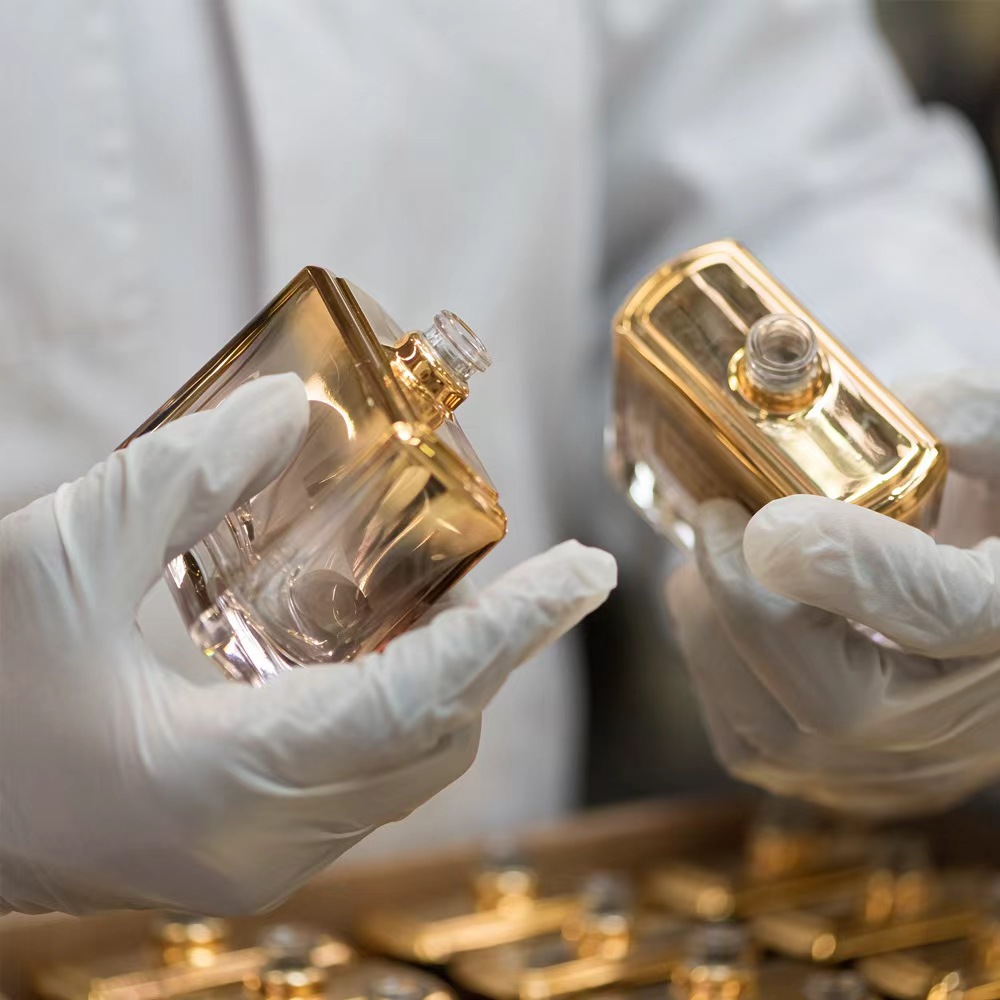
Perfume bottles are more than containers for fragrances. Their appearance plays an important role in brand identity, product positioning, and customer experience. A smooth, attractive coating can make a perfume bottle look more luxurious and distinctive.
However, scratches and peeling are two common quality concerns in perfume bottle decoration. Scratches can affect the bottle’s appearance during handling, storage, and transportation, while peeling may cause the coating to separate from the glass surface.
For perfume brands, manufacturers, and packaging buyers, understanding how to prevent these problems is essential to maintaining consistent product quality.
In this guide, we explain the main causes of scratches and coating peeling, as well as practical ways to improve the quality and durability of decorated perfume glass bottles.
1. What Causes Scratches and Peeling on Perfume Bottle Coatings?
Before choosing a solution, it is important to understand the difference between these two problems.
Scratches on Perfume Bottle Surfaces
Scratches are visible marks or damage on the coated surface. They may occur during production, handling, assembly, storage, or transportation.
Common causes include:
- Bottles rubbing against each other during handling.
- Improper placement on production equipment or work surfaces.
- Contact with hard or sharp objects.
- Insufficient protection during storage and transportation.
- Inadequate coating hardness or unsuitable coating materials.
Matte, glossy, metallic, and gradient finishes may show surface damage differently. Therefore, the inspection criteria should match the selected decoration effect.
Peeling of Perfume Bottle Coatings
Peeling occurs when the coating separates from the glass surface, resulting in flaking, lifting, or exposed areas.
Possible causes include:
- Dust, oil, or other contaminants on the glass surface.
- Inadequate surface preparation before coating.
- Poor compatibility between the glass surface and coating materials.
- Incorrect coating application conditions.
- Insufficient or improper curing.
- Inappropriate handling before the coating has fully cured.
Good coating adhesion depends on several factors working together, rather than on the coating material alone.
2. Clean and Prepare the Glass Surface Properly
Proper glass surface preparation is one of the most important steps in preventing coating peeling.
Even small amounts of oil, fingerprints, dust, or other contaminants can interfere with the contact between the coating and the glass surface.
Recommended preparation practices include:
- Inspecting incoming glass bottles for visible contamination and surface defects.
- Cleaning the bottles using a suitable cleaning process.
- Removing dust, oil, and fingerprints before decoration.
- Ensuring the glass surface is completely dry before coating.
- Avoiding unnecessary hand contact with prepared surfaces.
Depending on the coating system and production requirements, additional surface treatment may also be considered.
For example, plasma surface treatment can be evaluated as a potential method to improve surface cleanliness or surface energy. Its effectiveness should be verified through sample testing with the actual glass, coating materials, and production conditions.
A clean and properly prepared surface provides a better foundation for consistent coating adhesion.
3. Choose Suitable Coating Materials
Not all coating materials perform in the same way.
The selected coating should be compatible with the glass substrate, the desired decorative effect, and the intended product application.
When selecting coating materials, consider:
Adhesion performance: The coating should be suitable for the glass surface and intended application process.
Surface hardness: Appropriate hardness can help reduce the risk of everyday surface scratches.
Flexibility and durability: The coating should maintain its integrity under expected handling and storage conditions.
Finish requirements: Matte, glossy, transparent, solid-color, and gradient finishes may require different material formulations and application settings.
Environmental compatibility: Temperature, humidity, and storage conditions should be considered when evaluating coating performance.
Before mass production, it is advisable to test the selected coating material on actual perfume bottles rather than relying only on technical specifications.
4. Control the Spray Coating Process
Even when the correct coating material is selected, inconsistent application may lead to uneven surfaces or poor coating performance.
A controlled spray coating process helps improve appearance consistency and reduce potential defects.
Important factors include:
- Spray distance: Maintain an appropriate distance between the spray gun and the bottle.
- Spray pressure: Use suitable pressure according to the coating material and equipment requirements.
- Spray speed: Keep the movement of the spray gun consistent.
- Coating thickness: Avoid excessive or insufficient coating application.
- Spray coverage: Ensure the bottle surface receives consistent coating coverage.
For special decorative effects such as gradient colors, translucent finishes, and multi-color coatings, process control is particularly important.
Consistent application helps reduce visible differences between bottles and supports more reliable production quality.
5. Ensure Proper Drying and Curing
Drying and curing are essential stages in the coating process.
A coating that appears dry on the surface may not have completed the required curing process. Handling bottles too early can increase the risk of scratches, marks, or surface damage.
To improve coating performance:
- Follow the coating supplier’s recommended drying and curing conditions.
- Control oven temperature and processing time where applicable.
- Avoid stacking or unnecessary contact before the coating is ready for handling.
- Allow sufficient cooling time after oven curing.
- Verify that the coating has reached the required condition before further processing.
Different coating materials may require different curing methods and conditions. Always follow the technical specifications of the selected coating system.
Proper curing helps the coating develop its intended performance and reduces the risk of premature surface damage.
6. Improve Handling During Production
A well-controlled coating process can still produce scratches if bottles are handled improperly afterward.
Glass bottles should be protected throughout the production process, especially after decoration.
Practical measures include:
- Using clean and suitable bottle holders or production fixtures.
- Avoiding direct contact between decorated bottle surfaces.
- Keeping worktables and conveyor contact areas clean.
- Training operators to handle decorated bottles carefully.
- Separating finished bottles with suitable protective materials.
- Avoiding unnecessary movement or repeated handling.
For bottles with delicate finishes, such as high-gloss, metallic, or gradient coatings, additional protection may be required.
Good handling practices help maintain the appearance of decorated bottles from production to final packaging.
7. Conduct Coating Quality Inspection
Quality inspection helps identify potential problems before decorated bottles are delivered to customers.
A practical inspection process should cover several aspects.
Visual Appearance Inspection
Check for:
- Scratches and surface marks.
- Uneven coating coverage.
- Color differences.
- Bubbles, dust particles, or visible defects.
- Peeling or lifting around edges and corners.
Coating Adhesion Testing
Adhesion testing helps evaluate how well the coating remains attached to the glass surface.
Depending on the coating system and customer requirements, suitable methods may include:
- Cross-hatch adhesion testing.
- Tape testing.
- Other coating adhesion evaluation methods.
Testing procedures and acceptance criteria should be agreed upon in advance, as different coating systems may require different test conditions.
Scratch and Abrasion Evaluation
Scratch and abrasion resistance can also be evaluated using suitable testing methods.
For example, controlled rubbing or abrasion tests can help assess how the coating performs under simulated handling conditions.
The test method, applied force, number of cycles, and acceptance criteria should be defined before testing.
Regular inspection and documented quality standards help manufacturers maintain consistent results across production batches.
8. Use Proper Packaging to Prevent Transportation Damage
Packaging is another important factor in protecting perfume bottle coatings.
Even well-decorated bottles can become scratched if they move against each other during transportation.
Recommended packaging practices include:
- Using individual compartments or protective separators.
- Preventing direct contact between coated bottle surfaces.
- Choosing suitable cushioning materials.
- Securing bottles to reduce movement inside cartons.
- Checking packaging conditions before shipment.
Packaging should be selected according to bottle shape, size, coating finish, and transportation requirements.
Proper protection helps preserve the bottle’s appearance throughout storage and delivery.
9. Work with an Experienced Perfume Bottle Decoration Manufacturer
Preventing scratches and peeling requires coordination across multiple production stages, including glass preparation, material selection, coating application, curing, handling, inspection, and packaging.
Working with an experienced perfume bottle decoration manufacturer can help buyers evaluate these factors before mass production.
At Dragon Perfumes Industry LLC, located in Ajman, UAE, we provide perfume glass bottle decoration services, including:
- Spray coating in customized colors.
- Matte and glossy surface finishes.
- Gradient color effects.
- Screen printing.
- Hot foil stamping.
- Customized bottle decoration solutions.
We understand that every perfume brand has different packaging requirements. From the initial sample to production, selecting suitable decoration methods and checking the finished appearance are important steps in achieving the desired result.
If you are developing a new perfume packaging project, discussing the bottle material, decoration effect, and quality requirements in advance can help reduce potential production issues.
Conclusion
Scratches and peeling can affect the appearance and perceived quality of perfume bottles. However, many of these problems can be reduced through proper glass surface preparation, suitable coating materials, controlled spray application, correct curing, careful handling, and effective quality inspection.
For perfume brands and packaging buyers, it is important to evaluate coating performance before starting mass production.
Choosing the right decoration process and working with a reliable manufacturing partner can help ensure that your perfume bottles maintain their intended appearance throughout production, storage, and transportation.
Looking for professional perfume bottle spray coating and decoration services in the UAE?
Contact Dragon Perfumes Industry LLC in Ajman to discuss your project and explore customized decoration solutions for your perfume glass bottles.
Frequently Asked Questions (FAQs)
1. Why does spray coating peel off perfume glass bottles?
Coating peeling may result from surface contamination, inadequate glass preparation, incompatible coating materials, or improper curing. Evaluating the complete coating process can help identify the cause.
2. How can scratches on perfume bottle coatings be reduced?
Scratches can be reduced through careful bottle handling, suitable production fixtures, proper surface protection, and protective packaging. Coating hardness and application quality should also be evaluated.
3. Does glass surface treatment improve coating adhesion?
Certain surface treatment methods may help improve surface conditions for coating. However, their effectiveness depends on the glass, coating material, and process parameters. Sample testing is recommended before mass production.
4. How do manufacturers test coating adhesion on glass bottles?
Common evaluation methods include cross-hatch adhesion testing and tape testing. The appropriate method and acceptance criteria should be selected according to the coating system and customer requirements.
5. Can matte and glossy perfume bottle coatings have different scratch resistance?
Yes. Different coating formulations and surface finishes may show different scratch and abrasion performance. The actual resistance should be evaluated through testing rather than determined by appearance alone.
6. How can perfume bottle coatings be protected during transportation?
Individual compartments, protective separators, suitable cushioning, and secure carton packing can help prevent bottles from rubbing against each other during transportation.
7. Where can I find perfume bottle decoration services in the UAE?
Dragon Perfumes Industry LLC is based in Ajman, UAE, and provides perfume glass bottle decoration services, including spray coating, screen printing, and hot foil stamping.
Want to Know More About Our Products?
View All Products Now